

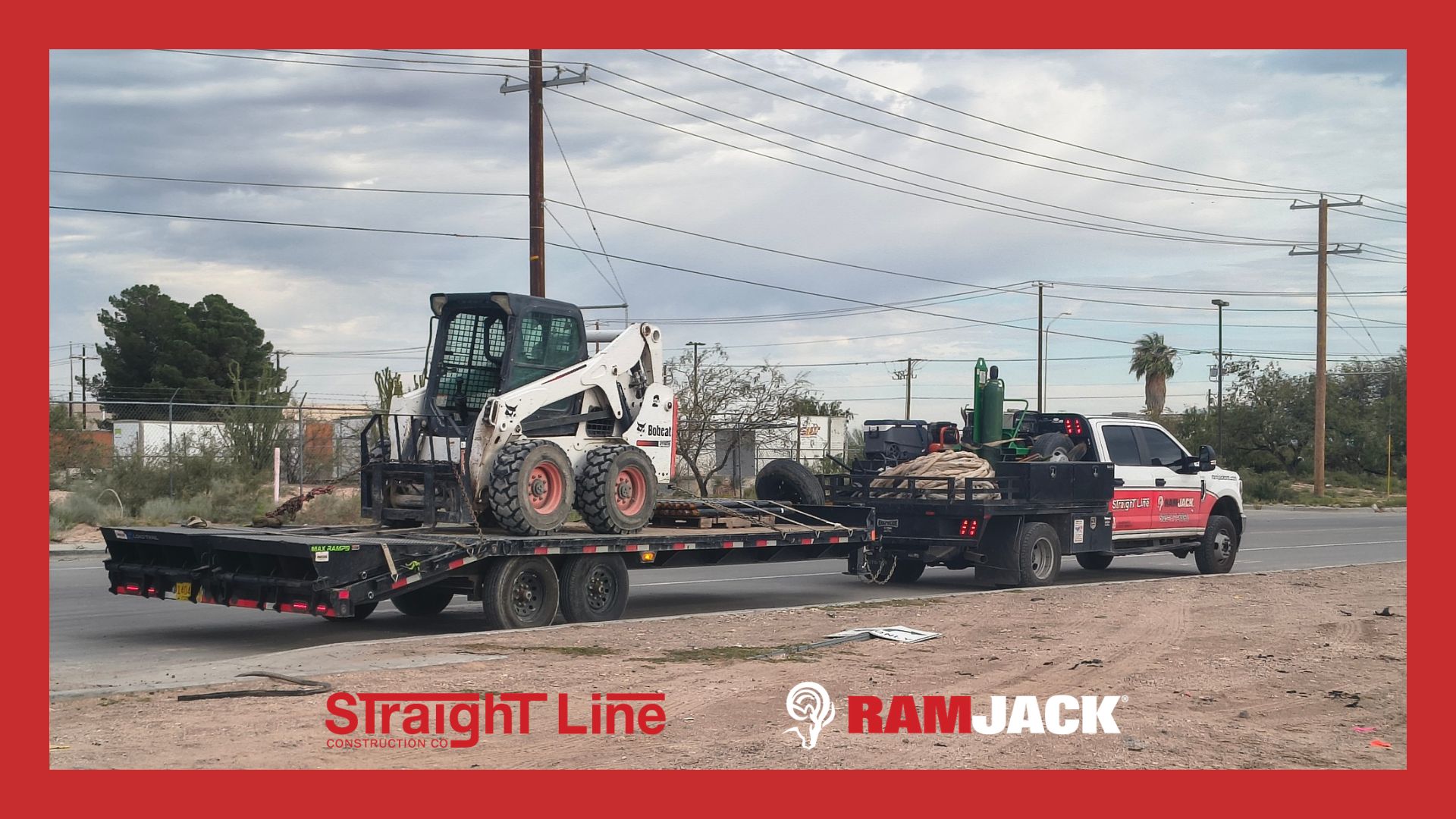
Helical Piers New Mexico: Deep Foundation Support for a New Industrial Scrubber Building
An industrial facility in Santa Teresa, New Mexico, required a deep foundation system to support a new scrubber building addition. This New Mexico helical pier project presented challenging soil conditions and strict settlement requirements, making helical piers an effective foundation solution. The design also utilized torque-based capacity verification to confirm that each pier met the specified installation requirements.
How Helical Piers and Torque Verification Work
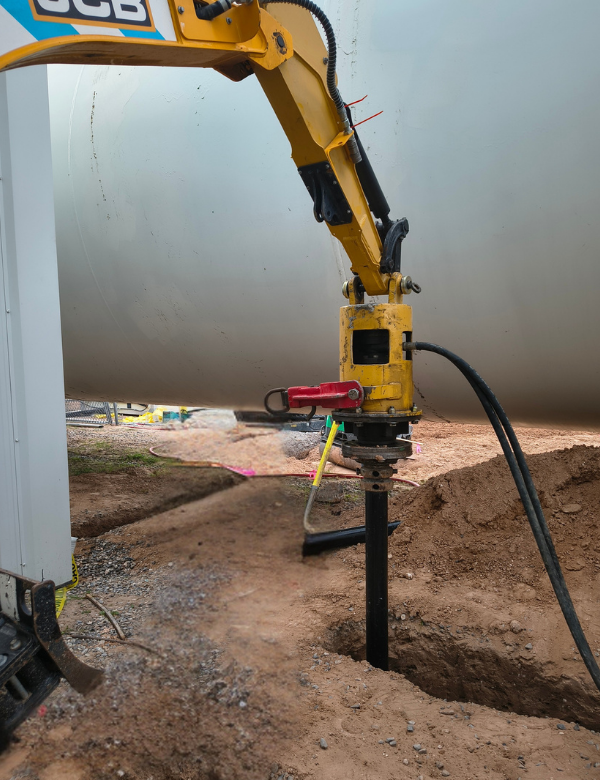
Helical piers are deep foundation elements consisting of steel shafts with one or more helical bearing plates that crews advance into the soil using hydraulic torque equipment. One of their primary advantages is the established correlation between installation torque and axial load capacity. In simple terms, the more resistance the pier meets as crews screw it into the ground, the greater its ability to support the weight of a structure. Therefore, engineers use this relationship, along with an appropriate factor of safety, to establish minimum installation torque requirements. However, some project specifications also require additional verification through proof testing or sacrificial load testing.
Project Conditions: Heavy Loads and Sandy Soils
The new addition includes a 54-foot-tall scrubber vessel and an elevated pipe rack, both requiring substantial foundation support. Also, site conditions consisted primarily of sandy soils, and the anticipated settlement associated with shallow foundations exceeded the project’s allowable limits. As a result, the engineered design specified deep foundations to support the new structures.
What Ram Jack Installed
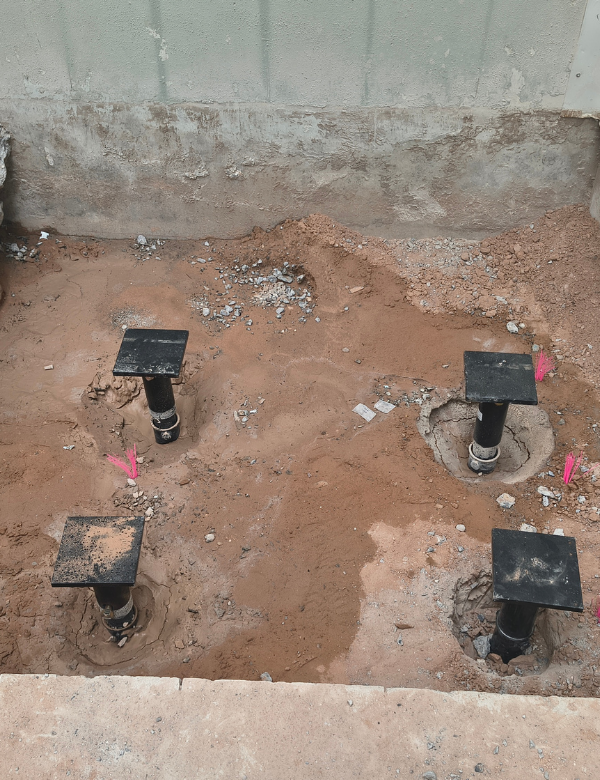
Ram Jack of New Mexico installed 10 Ram Jack helical piers in three days. The piers support two pile caps near the new building. A pile cap is a concrete block that sits on a group of piers. It spreads the load across all of them. Specifically, the first cap uses four piers and surrounds an existing foundation wall. The second uses six.
Next, crews advanced each pier until it achieved the specified minimum installation torque of 4,500 ft-lbs. As a result, installed depths varied based on soil resistance, ranging from 10 to 12 feet at the first pile cap and 21 to 25 feet at the second. Finally, all 10 piers met the engineered installation torque requirements and minimum installation depth, providing documented confirmation of the required installation criteria.
Project Scope: Helical Piers New Mexico at a Glance
A sealed engineering submittal documented the helical system before mobilization. Ram Jack manufactures its helical piers in Ada, Oklahoma, at an ISO-certified facility with American-made steel.
- Project: new industrial scrubber building addition
- Location: Santa Teresa, New Mexico (Doña Ana County)
- Foundation system: Ram Jack helical piers with new construction brackets
- Piers installed: 10 total (four at the first cap, six at the second)
- Total installed length: 177 linear feet
- Shaft and helix: 2⅞-inch round shaft (ASTM A500) with a single 8-inch helix
- Allowable capacity per pier: 20 kips compression, 7 kips tension, 1.25 kips shear
- Minimum factor of safety: 2.0
- Minimum installation torque: 4,500 ft-lbs
- Field duration: three working days
Sandy Soils and Torque-Based Termination
The subsurface conditions consisted primarily of sand extending at least 29 feet below grade. Helical pier installation torque provides an indication of the resistance encountered as the helical plates advance through the soil. Using the engineered torque-to-capacity correlation, crews monitored installation torque and advanced each pier until the specified minimum requirement was achieved.
How Helical Piers New Mexico Crews Verified Capacity
The engineering design specified a 20-kip capacity per pier with a 2:1 factor of safety, requiring an ultimate capacity of at least 40 kips. Engineers establish minimum installation torque and embedment depth requirements to ensure the piers achieve the specified design capacity. For this project, the minimum installation torque was 4,500 ft-lbs. Crews monitored and documented installation torque and final depth at each location, with all 10 piers meeting the specified installation requirements.
A third-party geotechnical representative observed pier installation on two of the three days. This level of quality control and quality assurance provides engineers a clear field record. Each pier then received a Ram Jack new construction bracket, which ties it into the concrete cap for a mechanical connection.
Three Days on Site: How the Work Unfolded
Day One: The crew mobilized, unloaded equipment, and staged the helical piers and brackets. A field walkthrough identified areas requiring an additional foot of excavation, which the crew completed before beginning installation.
Day Two: The crew installed seven helical piers across two pile cap locations, completing all four piers at the first cap and three of the six piers required at the second cap. Each pier was installed at a slight angle, known as a batter, to provide separation between the helical bearing plates and minimize overlapping zones of soil resistance. By combining the load-bearing capacity of multiple piers within a single pile cap, engineers can achieve higher foundation capacities while using compact installation equipment. This approach is particularly advantageous on projects where access or space limitations make larger drilling equipment impractical.
Day Three: The crew installed the remaining three piers at the second pile cap, completing all 10 installations. Each pier was then cut to the required elevation and fitted with a Ram Jack new construction bracket for integration into the concrete pile caps. Facility safety requirements included hot work permits and a mandatory two-hour fire watch, which the crew completed as part of the installation process.
What This Helical Piers New Mexico Project Shows
The Santa Teresa project demonstrates the benefits of helical piers for commercial and industrial foundation applications. The combination of an engineered design, monitored installation torque, and coordinated field execution allowed the crew to complete all 10 piers in just three working days.
Installation torque and final depths were documented at each pier location, confirming compliance with the specified installation requirements. The completed system provides deep foundation support for the new industrial structures.
For another example of complex foundation work, explore our foundation project at a major technology facility in New Mexico. Our Castle Rock wet well project also demonstrates the installation of high-capacity helical piers at significant depths.
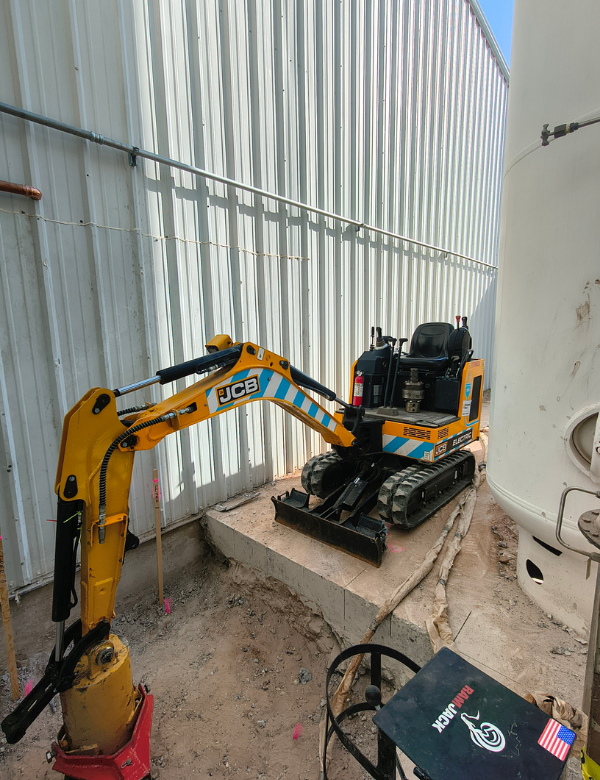
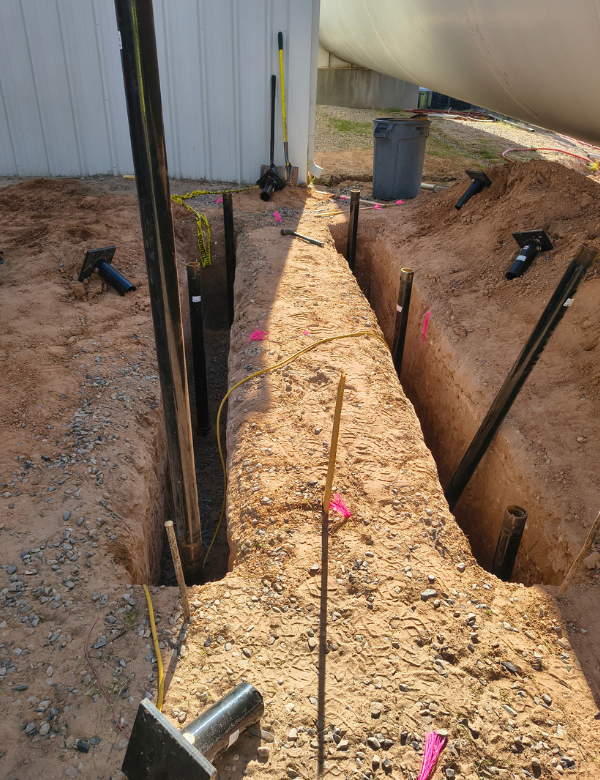
Planning a deep foundation project in New Mexico, Colorado, or Arizona? We would be happy to have a conversation with you. Call our office today to get a foundation repair specialist to visit you home or business.
Frequently asked questions
One of the key advantages of helical piers is that installation torque provides a measurable indication of each pier’s load-bearing capacity. As each pier is installed, crews monitor and record the torque required to advance it into the soil. Using an established torque-to-capacity correlation, engineers can estimate the ultimate load capacity of each individual pier. A 2:1 factor of safety means the estimated ultimate capacity must be at least twice the allowable working load. Combined with minimum embedment requirements and documented installation records, this allows engineers to verify that each pier meets the design criteria without necessarily requiring costly and time-consuming load testing. Depending on project specifications, proof testing or sacrificial load testing may still be required.
Crews stopped each pier on torque instead of a fixed depth. As a result, soil resistance set each stopping point. Installed lengths ranged from 10 to 25 feet.
Deep helical piers transfer structural loads to deeper, more stable bearing soils. They provide a foundation solution when shallow soils cannot meet settlement or load requirements. Their installation torque also helps verify that each pier achieves its required capacity.