

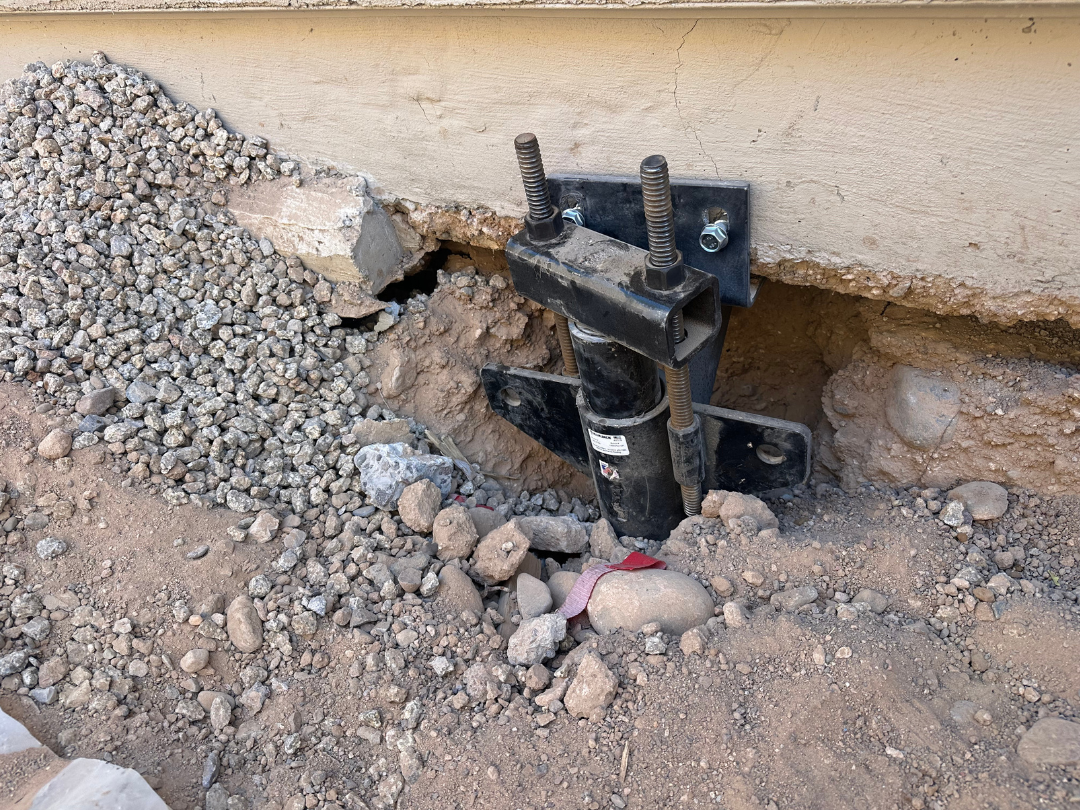
Youngtown, AZ Foundation Repair with Engineered Helical Support
This Youngtown AZ foundation repair project involved a post-tension slab home with visible cracks and major settlement. The homeowners reported widening cracks and uneven floors, which signaled ongoing movement. A third-party inspection documented up to 6 inches of elevation variance across the structure, confirming severe differential settlement. Ram Jack Arizona installed an engineered helical pier underpinning system to stop further settlement and restore long-term structural support.
What Makes This Youngtown, AZ Foundation Repair Different?
Not every foundation repair company can customize the support system to the exact needs of a post-tension slab home. Ram Jack Arizona uses multiple pier sizes, bracket types, and installation methods to match the design to the structure and soil, instead of forcing a one-size-fits-all solution. For this Youngtown project, the team combined exterior helical piers, slab piers, and poly foam injection to create a complete, engineered repair tailored to this home.
Project Scope
- Residential foundation repair in Youngtown, AZ
- 19 underpinning helical piers installed along the exterior foundation walls
- 2 7/8-inch helical piers used for deep structural support
- Low-profile brackets installed at each pier location
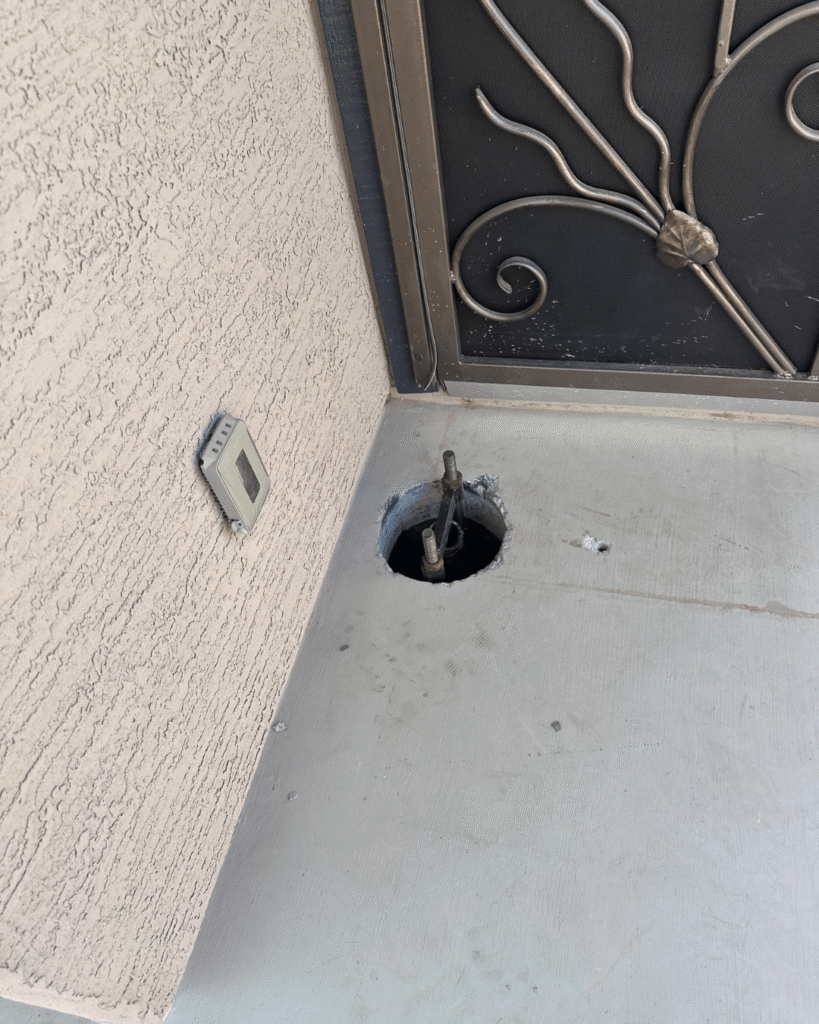
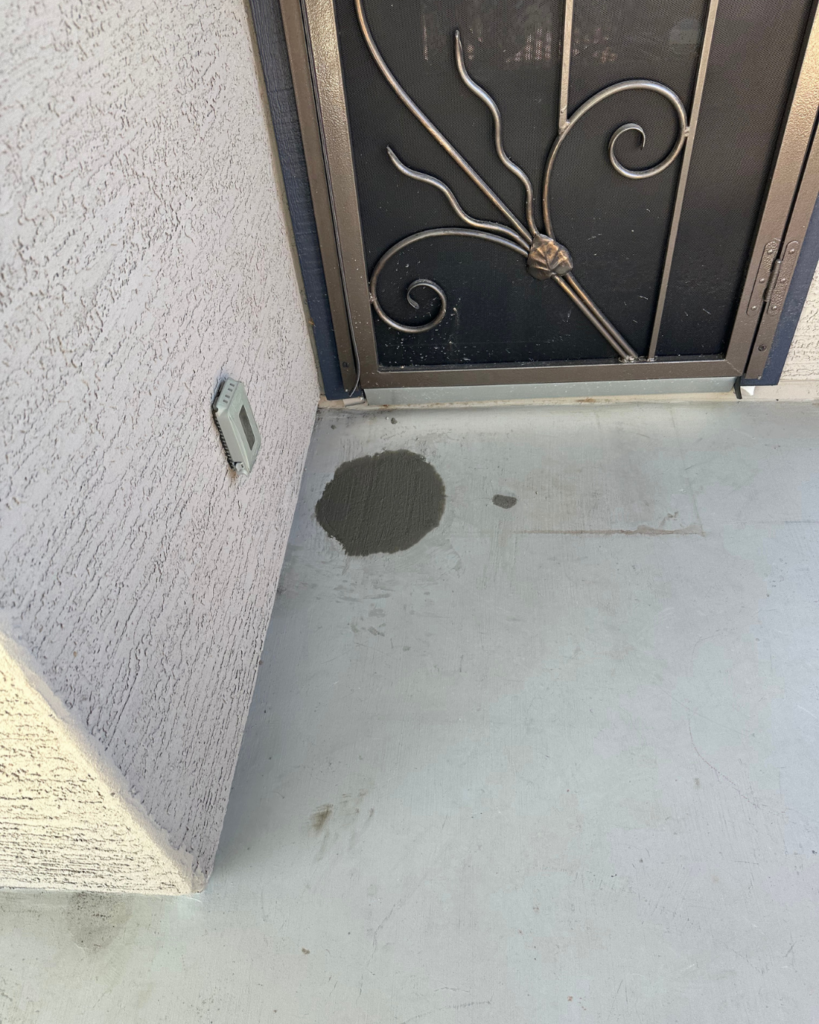
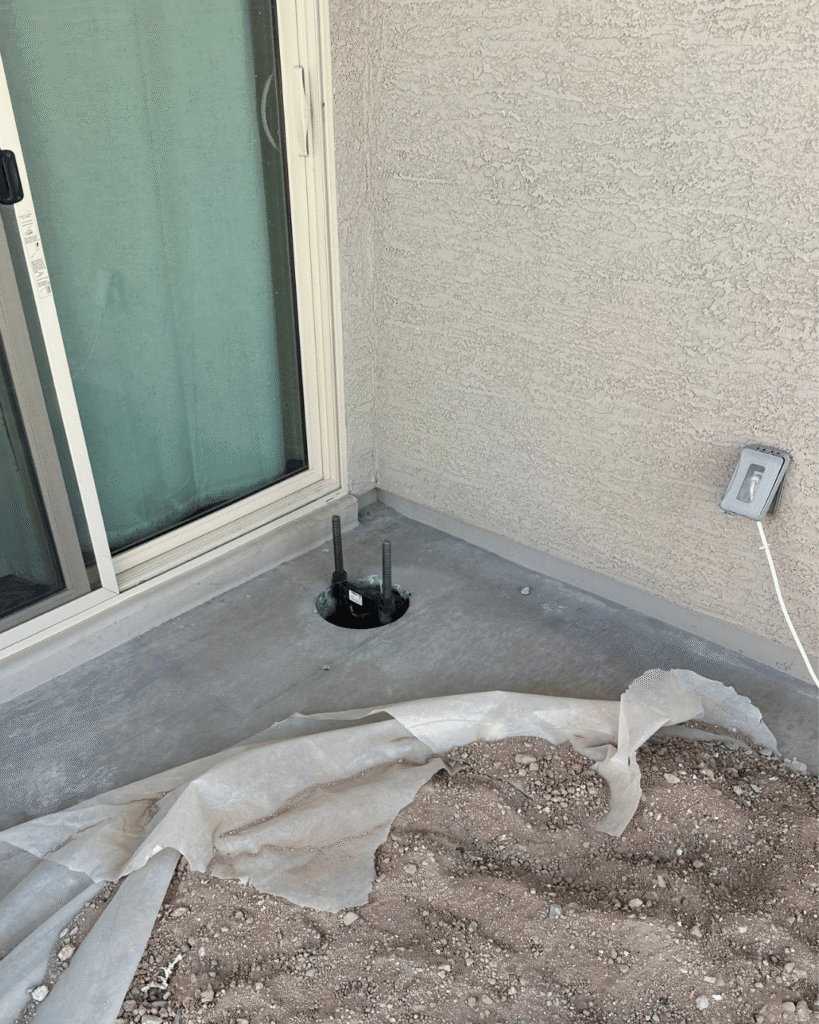
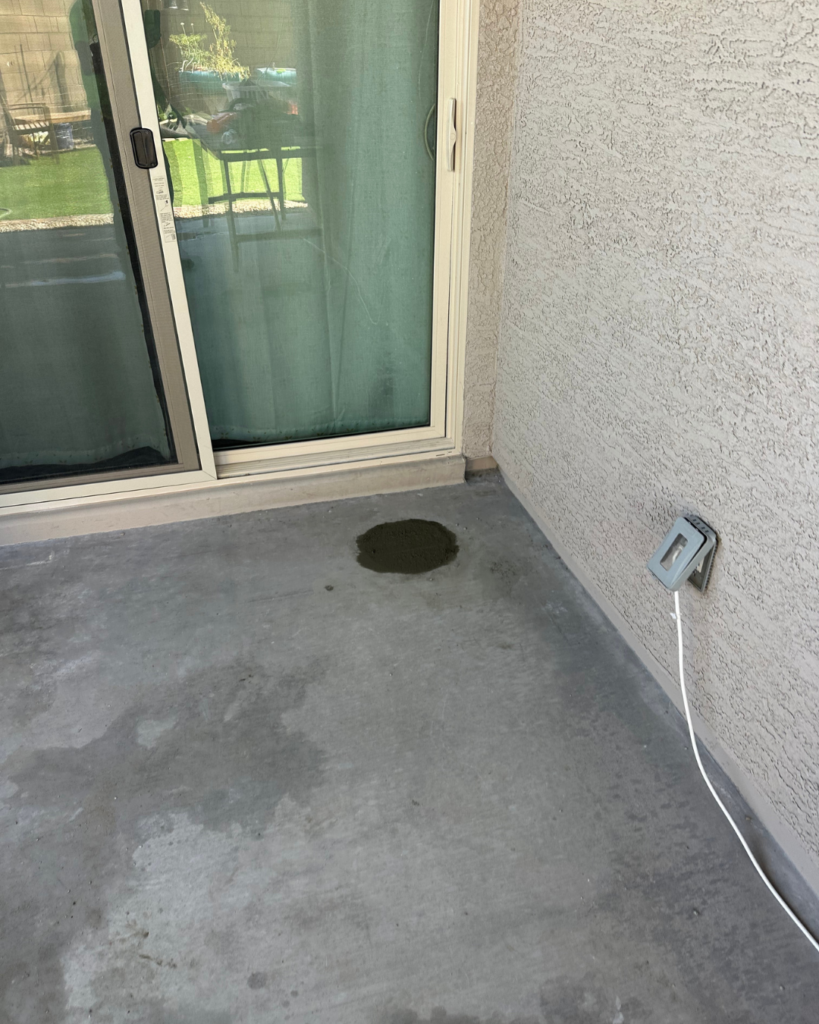
- Slab piers installed at the front and back patio
- Poly foam injection used to fill voids beneath the slab
- Work completed on the north, south, and west sides of the home
Soil Conditions Drove the Design
The home sat next to a wash, which indicated looser, more erodible native soils near the structure. This increased the risk of soil movement and ongoing settlement under the post-tension slab. A geotechnical report confirmed deeper layers of silty sand and clayey sand, both of which can shift under load. To bypass these unstable layers, the design called for deeper pier embedment into more competent bearing strata. This engineered foundation repair relied on precise load calculations and real-time torque monitoring during installation. Soil variability dictated final pier depths and spacing to ensure consistent support.
Access Constraints Shaped the Installation
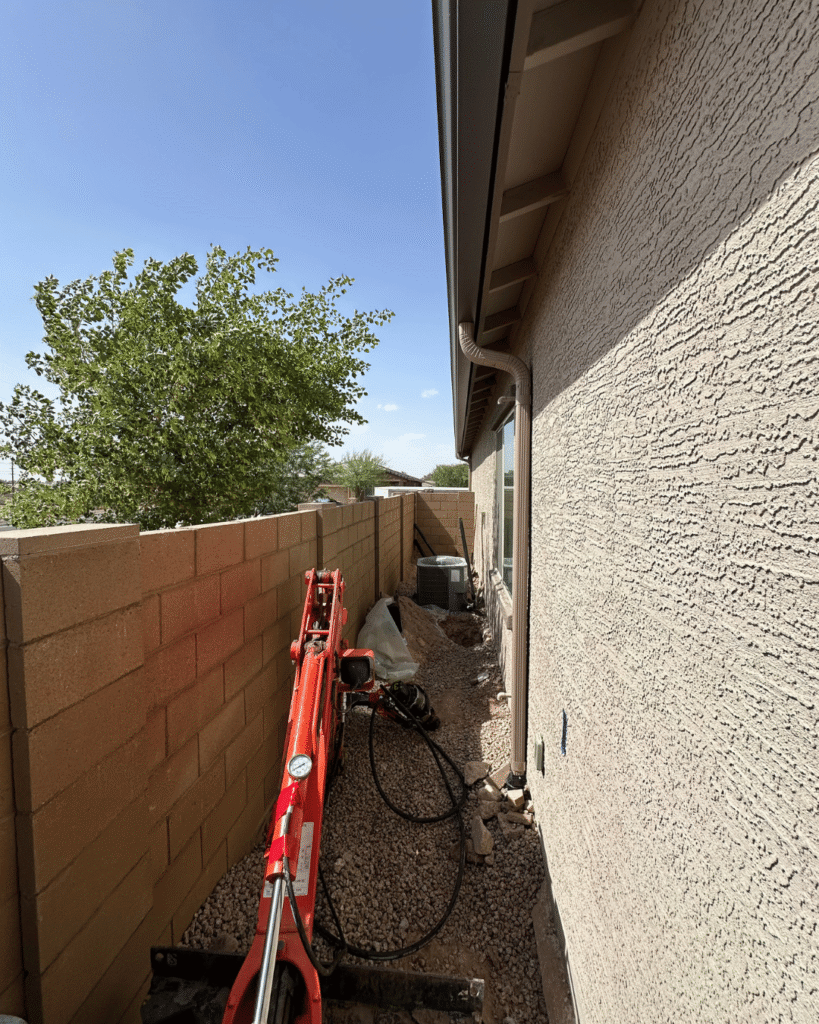
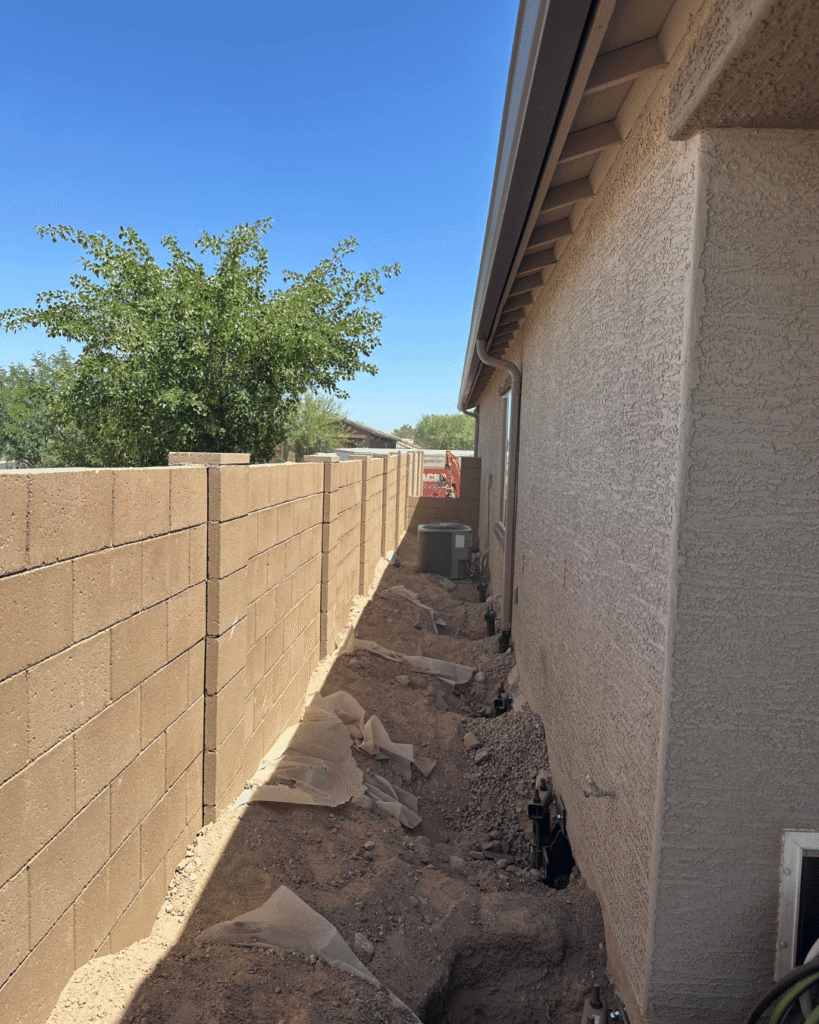
The west side of the property had tight access near the fence line, which limited equipment movement. Crews hand dug and hand drove several piers in this area to maintain alignment and load capacity. This limited access required careful planning, staging, and coordination to keep the project on schedule. The corner layout also added complexity to the foundation stabilization work, as loads had to be balanced across multiple intersecting walls. Installers adjusted lift sequencing to deliver an even, controlled elevation correction.
How the Helical Pier System Was Installed
Ram Jack Arizona installed the helical pier underpinning system along the exterior foundation walls to stabilize the structure. Pier depths ranged from 15 to 25 feet, depending on soil resistance and torque readings at each location, to verify proper load-bearing capacity. Crews also installed slab piers at both the front and back patio to address localized settlement and restore support.
Why Ram Jack Slab Brackets Are Different
Ram Jack’s slab brackets support and lift interior floor slabs, patios, sidewalks, and other concrete flatwork. In contrast, Ram Jack’s Low Profile Foundation Repair Bracket installs from the side of a structure and slides beneath a footing, foundation wall, or slab edge. However, a slab bracket can install virtually anywhere within the slab area. Installation typically requires an approximately 10-inch diameter cored opening through the concrete. After coring, the crew places the slab bracket beneath the slab and connects it to a helical pier installed into competent load-bearing soils below. Once installed, the bracket bears against the underside of the concrete. This contact allows the slab load to transfer to the pier system and, when appropriate, be lifted toward its original position.
This installation method allows crews to complete repairs in locations that would otherwise require extensive excavation from the slab perimeter. By limiting concrete removal to a relatively small cored opening, the system reduces disruption, minimizes concrete replacement, and preserves more of the existing slab. While both systems transfer structural loads to engineered helical piers, the Low Profile Bracket primarily supports perimeter foundations. In contrast, the Slab Bracket is designed to support and recover concrete slabs from beneath the slab surface itself.
Poly Foam Injection for Slab Support
After structural lift was completed, crews injected poly foam beneath approximately 1,310 square feet of slab in the southeast corner of the home. The foam expanded to fill voids, improve subgrade contact, and provide additional support beneath the slab. This process helps reduce the risk of future slab movement and complements the deep helical pier system by supporting the surface load path.
Project Result
The completed repair provided deep Arizona foundation repair support for the home and transferred structural loads into stable soils below the active zone. The helical piers stopped ongoing settlement, while slab brackets and poly foam improved the performance of the slab and patios. As a result, the home now has a more stable foundation system and reduced risk of future differential settlement.
Frequently Asked Questions
Homeowners in Youngtown, AZ should consider foundation repair if they see stair-step cracks, widening floor cracks, doors that stick, or uneven floors. These symptoms often indicate settlement or soil movement under the slab, which can be confirmed with a professional foundation inspection and elevation survey.
Helical piers are ideal for Youngtown, AZ foundation repair because they bypass loose, erodible soils and transfer the home’s weight into deeper, more stable layers. This helps stop ongoing settlement and provides long-term support for post-tension slab foundations on problematic desert soils.
Slab brackets are engineered to support and lift interior slabs, patios, and flatwork from beneath the concrete, not just at the perimeter. This allows repairs in hard-to-reach areas with smaller core holes, less concrete removal, and reduced disruption compared to traditional perimeter-only foundation brackets.
Poly foam injection fills hidden voids beneath your slab, improves soil contact, and supports concrete that has settled or is beginning to move. When combined with helical piers, poly foam helps stabilize surface loads and reduce the risk of future slab cracking or uneven floors.
Need Youngtown AZ foundation repair for settlement, slab movement, or unstable soils? Ram Jack Arizona delivers engineered foundation repair solutions for residential structures across Arizona.