

Engineered Helical Foundation Support for PCWRA’s New Pump Station
Forty-two feet below grade, Straight Line Construction faced a confined workspace, heavy equipment logistics, unpredictable lightning, and a helical pier foundation system that needed to support critical water infrastructure.
The Plum Creek Water Reclamation Authority’s new reuse pump station required a deep foundation for its wet well, a structure designed to handle substantial water loads and support essential infrastructure. Each foundation element needed to achieve a 50-kip allowable capacity.
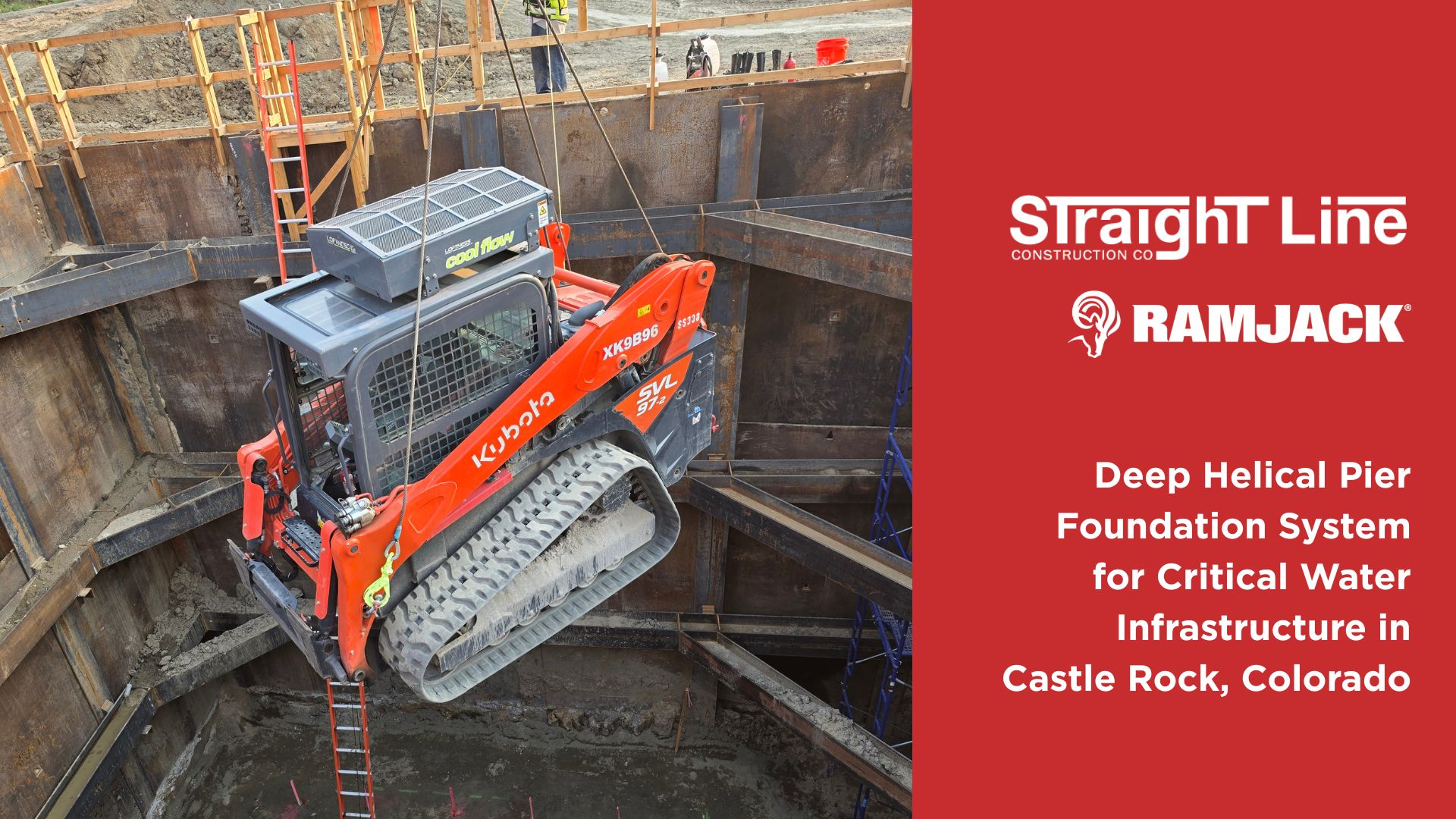
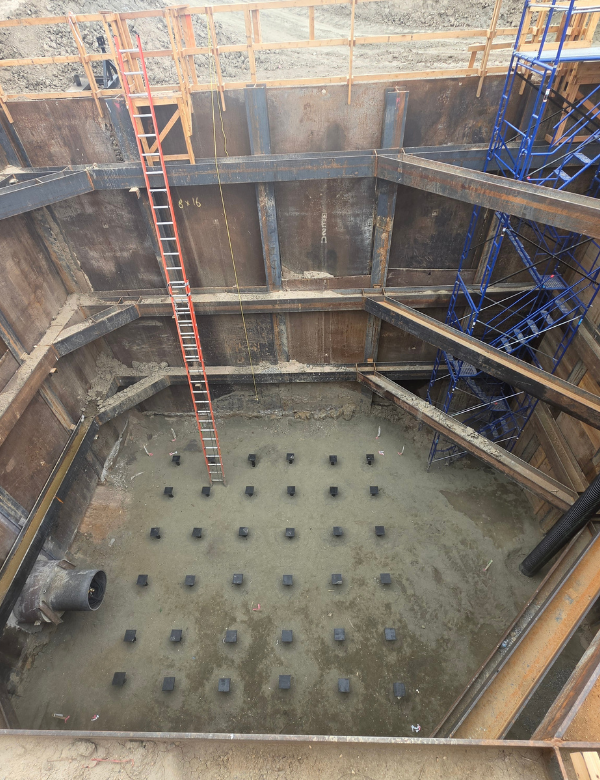
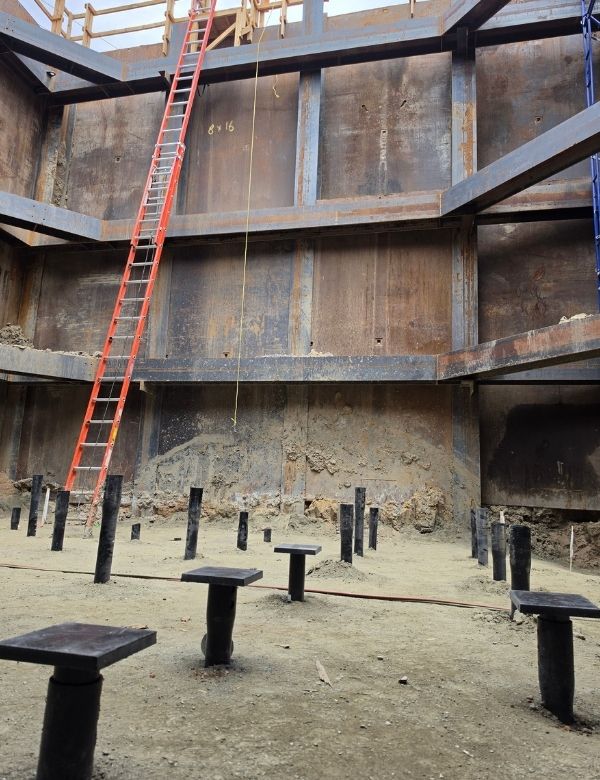
Straight Line Construction provided the solution with 36 Ram Jack helical piers installed directly from the bottom of the 42-foot-deep excavation. The crew lowered an 11,000-pound skid steer into the wet well by crane, carefully sequenced each installation within the limited workspace, and adapted the original helix design to improve efficiency while meeting the project’s load requirements.
Project Scope: Helical Pier Foundation System
- Project: PCWRA Reuse Pump Station
- Location: Castle Rock, Colorado
- Foundation system: Ram Jack helical piers
- Number of piers installed: 36
- Installation location: Bottom of a 42-foot-deep wet well excavation
- Steel shaft diameter: 3½ inches
- Helix configuration: 10-inch and 12-inch helices
- Allowable capacity: 50 kips per pier
- Average pier installation depth: Average 50 feet
- Minimum installation torque: 14,300 ft-lbs
- Installation duration: Four days
42 Feet Below Grade: Installing Piers Inside the Wet Well
The wet well excavation created one of the project’s most unique challenges.
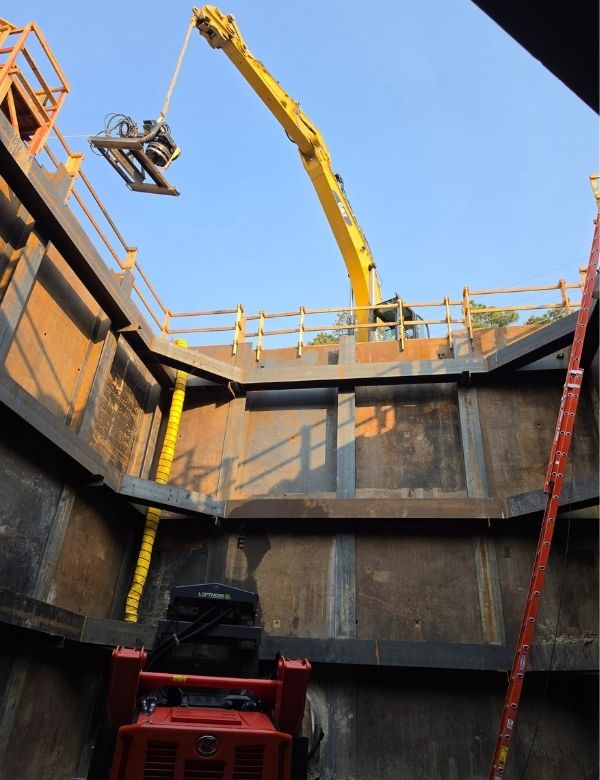
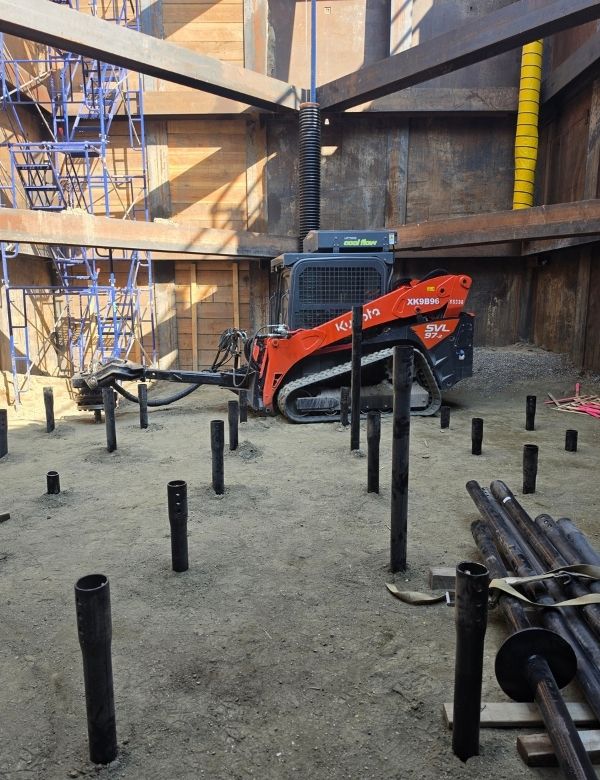
Working 42 feet below grade meant getting the crew and every piece of equipment into the bottom of the wet well before installation could begin. Helical pier materials were lowered into the excavation, along with an 11,000-pound skid steer used for installation. With the help of a crane, Straight Line Construction essentially built its workspace at the bottom of a 42-foot excavation.
The confined workspace also influenced how the crew approached the installation sequence. Because the project required larger equipment to achieve the necessary installation torque and 50-kip capacity, the team had to carefully plan the order of every installation. Equipment needed enough room to maneuver while each pier had to remain accessible throughout the process.
Straight Line Construction carefully coordinated pier locations and installation order to maximize the available workspace. This planning allowed the crew to install all 36 piers inside the confined wet well without compromising the required capacity or foundation layout.
Why 50-Kip Helical Piers Were Critical to the Project
Each Ram Jack helical pier was designed for a 50-kip allowable capacity. That capacity mattered because the wet well will support critical infrastructure and substantial water loads. The helical pier foundation system needed to create a stable base capable of supporting the structure over time.
Straight Line Construction monitored installation torque throughout the project to verify that each pier achieved the required performance criteria.
The team installed 3½-inch diameter steel shafts with an average installation depth of 50 feet below the bottom of the wet well. In other words, crews worked 42 feet below grade and then advanced the helical piers roughly another 50 feet into the bearing strata.
Together, the deep excavation and pier installation created a deep foundation system extending significantly below the original ground surface.
An Alternative Helical Pier Design Improved Efficiency
The original design called for 8-inch and 10-inch helices. However, Straight Line Construction identified an opportunity to improve the system during design development. The team adjusted the configuration to 10-inch and 12-inch helices.
The larger helix configuration provided a more efficient solution for the site’s dense sandy soils while meeting the project’s 50-kip load requirements. The adjustment also helped manage stress on the 3½-inch shafts and reduce installation depths. It demonstrates how Straight Line Construction’s design-build approach can identify practical alternatives without compromising performance.
Rather than treating the original design as the only possible solution, the team evaluated the project requirements and developed an alternative that remained economical while meeting the necessary structural demands.
Working Through Lightning Delays and a Four-Day Installation Schedule
The crew experienced several lightning delays throughout the project. Each delay stopped work and required the team to closely monitor changing weather conditions before safely returning to the wet well. However, the interruptions did not prevent the project from moving forward.
Through careful coordination, installation sequencing, and constant schedule adjustments, Straight Line Construction completed all 36 helical piers in four days.
A Helical Pier Foundation System for Complex Municipal Infrastructure
The PCWRA reuse pump station required more than a standard foundation installation.
Straight Line Construction had to install 36 high-capacity helical piers at the bottom of a 42-foot-deep wet well. The crew worked with limited space, lowered heavy equipment into the excavation by crane, carefully sequenced every installation, and navigated lightning delays. Meanwhile, the helical pier foundation system had to achieve a 50-kip allowable capacity for every pier.
The project also demonstrated the value of design-build flexibility. By adjusting the original 8-inch and 10-inch helix design to a 10-inch and 12-inch configuration, Straight Line Construction developed an alternative solution that improved efficiency while meeting the project’s structural requirements.
The result is a deep helical pier foundation system designed to provide reliable support for critical water infrastructure in Castle Rock, Colorado.
Frequently Asked Questions
Helical piers provide deep foundation support when surface soils cannot adequately support structural loads. In commercial and municipal construction, helical piers can transfer loads into deeper, more stable soil layers and support foundations, pump stations, retaining structures, and other critical infrastructure.
The PCWRA project required deep foundation support due to variable clay and dense sandy soils. Straight Line Construction used high-capacity helical piers extending approximately 50 feet into the bearing strata. Field torque monitoring helped verify that the piers achieved the required 50-kip allowable capacity.
Helical pier design depends on soil conditions, structural loads, required capacity, installation depth, and site constraints. Engineers use geotechnical information and field installation data to determine the appropriate pier diameter, helix configuration, depth, and installation torque for each project.
When Colorado’s critical infrastructure demands dependable foundation support, call Straight Line Construction. Our experienced team delivers professional, engineered solutions built to meet the demands of complex commercial projects.