

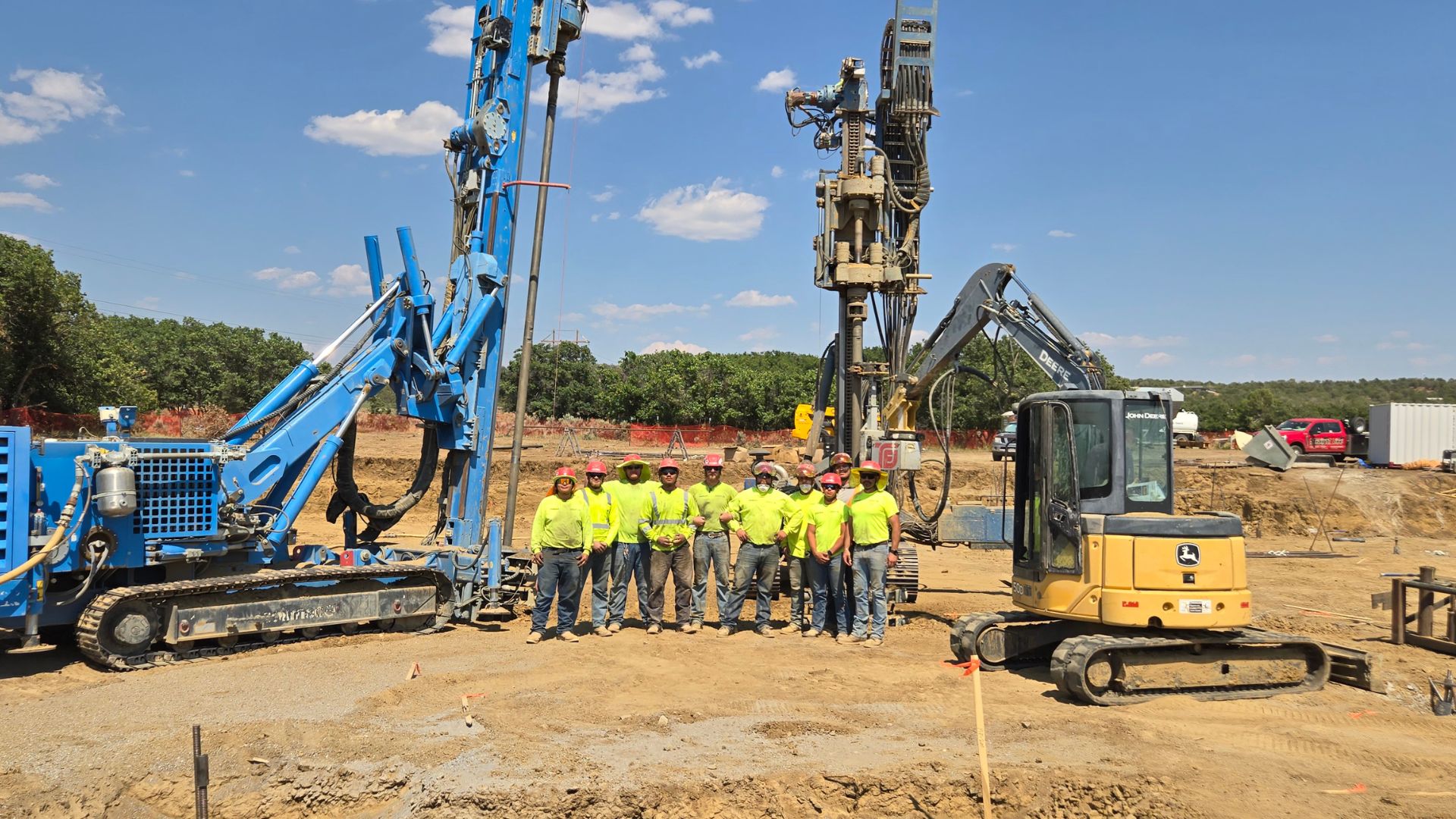
Deep foundation support for a new 68,500-square-foot elementary school
Three Springs Elementary School required reliable deep foundation support for its new 68,500-square-foot campus in Durango, Colorado. However, variable soil conditions created installation challenges across the building footprint.
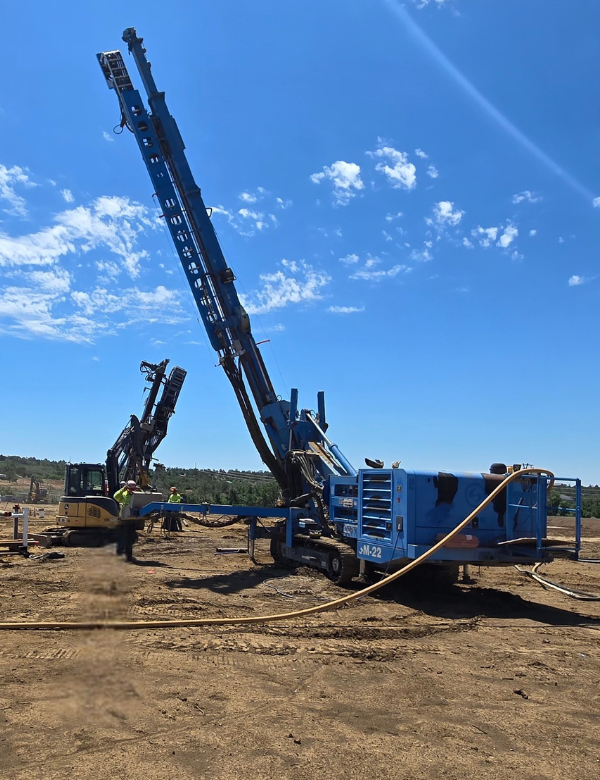
Straight Line Construction installed a micropile foundation system with 606 micropiles. The team adapted to changing claystone depths, developed custom drilling tools, and coordinated long-distance material deliveries. As a result, the completed system provides engineered support for a school built to serve the Durango community for decades.
Project at a Glance
- Project: Three Springs Elementary School
- Location: Durango, Colorado
- Construction type: New elementary school construction
- Building size: 68,500 square feet
- Total micropiles installed: 606
- Battered micropiles installed: 112
- Micropile diameter: 6 inches
- Design capacities: 40 to 100 kips
- Installation depths: 21 to 64 feet
- Reinforcement: Multiple threaded reinforcing bar sizes
- Custom tooling: PDC drilling bits developed for site conditions
- Testing: Four verification tests and proof testing
Variable Soils Required an Adaptable Micropile Foundation System
The site contained clay over claystone. The design anticipated claystone at an average depth of approximately 32 feet. However, the claystone elevation changed across the property.
As a result, drilling conditions varied from one micropile location to the next. Some micropiles reached claystone sooner. Others required deeper installation into competent material.
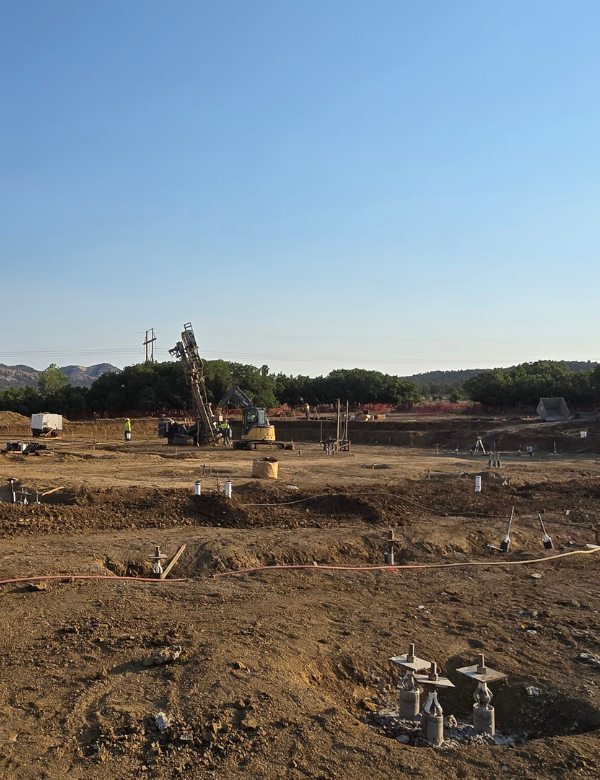
Straight Line installed 606 micropiles from 21 to 64 feet deep. This range allowed the team to meet the required design criteria at each location. The adaptable micropile foundation system also supported changing conditions across the large school footprint.
Custom PDC Drilling Bits Improved Production
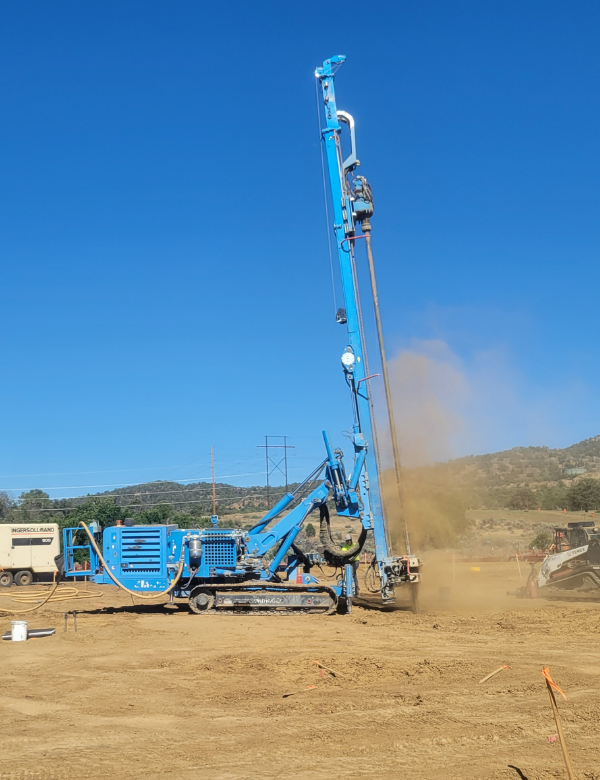
Drilling efficiency mattered on a project with 606 micropiles. Therefore, Straight Line developed custom PDC drilling bits for the site’s clay and claystone profile. The specialized tooling helped crews drill more efficiently through changing subsurface conditions. It also supported steady progress across hundreds of micropile locations.
This field-driven approach helped the team maintain production while adapting to the site. In addition, it reduced the need to rely on one fixed drilling method across changing ground conditions.
Remote Logistics Supported Installation
Durango is several hours from Straight Line Construction’s Pueblo headquarters. Because of this distance, the project required careful coordination of crews, equipment, materials, and deliveries.
Grouting operations created a significant and continuous demand for cement. Cement tankers completed a 12-hour round trip approximately every three days to supply grout materials. The team also planned around road construction, detours, and wildfire-related travel conditions.
Straight Line coordinated these resources before and throughout installation. As a result, crews maintained a steady pace and avoided material interruptions during the 606-micropile installation.
Vertical and Battered Micropiles Met Foundation Demands
The foundation design included several micropile configurations. This approach allowed the system to address different load demands across the new school.
Straight Line installed both vertical and battered micropiles. Vertical micropiles provided deep axial support beneath foundation elements. Meanwhile, crews installed 112 battered micropiles at 20 degrees to help resist lateral loads.
The team also used multiple threaded reinforcing bar sizes. Each configuration matched the structural requirements at its assigned location. Together, these elements created a flexible micropile foundation system for the Three Springs Elementary School project.
Testing Verified Micropile Performance
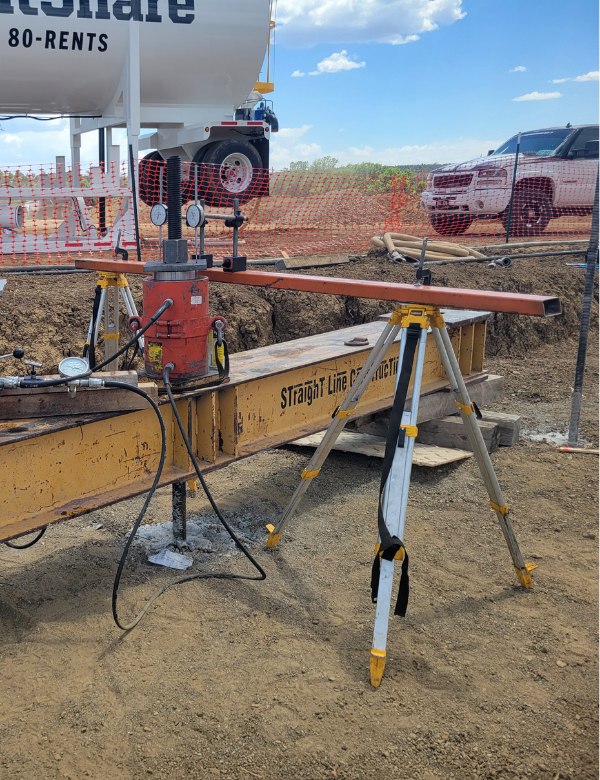
Straight Line completed pre-production verification testing on four micropiles before beginning full production. These tests confirmed that the planned micropile foundation system could meet project performance requirements under field conditions.
The team also completed proof testing on approximately 2% of production micropiles. Proof testing verified the performance of installed production micropiles at selected locations.
Successful testing gave the project team confidence in the completed deep foundation system. More importantly, it confirmed that the micropiles performed as designed in the project’s variable soil conditions.
Micropile Foundation Support for a Durango School
Three Springs Elementary School demonstrates Straight Line Construction’s ability to deliver complex micropile foundation systems on demanding Colorado jobsites. The team installed 606 micropiles while adapting to variable claystone depths, custom tooling needs, and remote project logistics.
The completed foundation system provides deep support for an important new community facility. Straight Line Construction delivers micropile installation and deep foundation support for schools, commercial buildings, infrastructure, and other complex projects throughout Colorado.
Need a Micropile Foundation System?
If your project requires micropile installation or deep foundation support, contact Straight Line Construction. The team can evaluate your site conditions and discuss an approach built around your foundation requirements.
When Colorado’s critical infrastructure demands dependable foundation support, call Straight Line Construction. Our experienced team delivers professional, engineered solutions built to meet the demands of complex commercial projects.