Residential Home | Severance, CO 80550
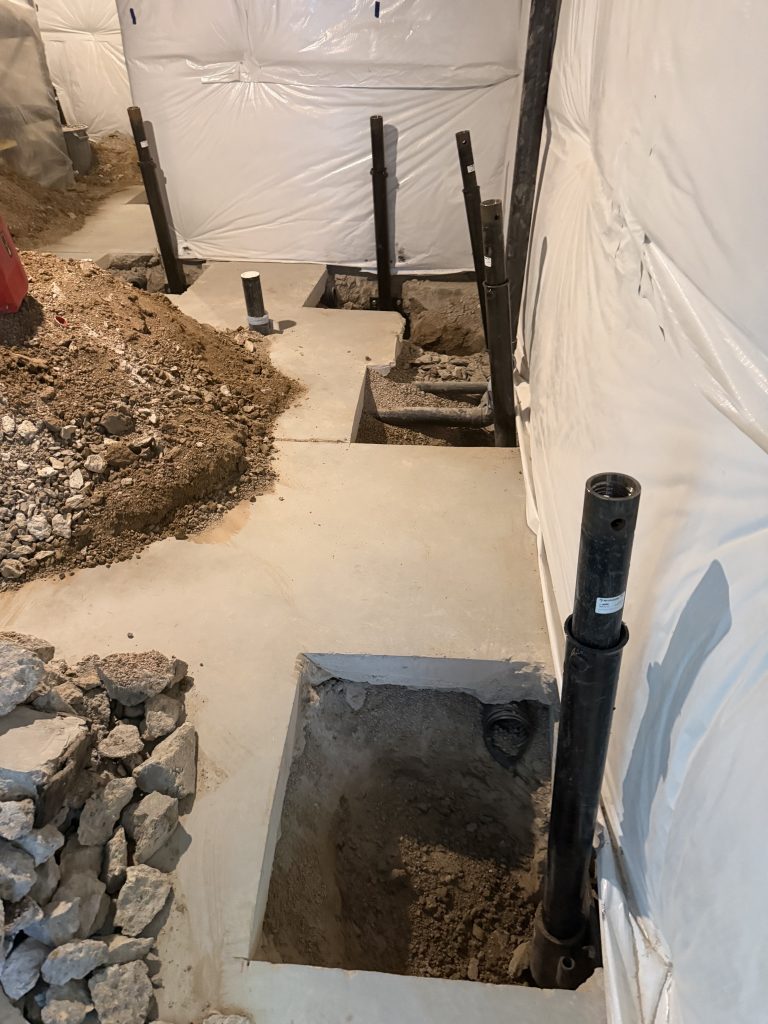
Ram Jack of Colorado completed a comprehensive residential foundation repair project in Severance, Colorado — a growing Front Range community in Weld County. After the homeowner reported classic signs of foundation movement, Ram Jack performed a detailed Floor Level Survey that confirmed settlement of up to 2 inches. Working in collaboration with Level Engineering and Inspection, Ram Jack designed and executed an engineered repair plan using 19 helical piers installed entirely from the interior of the unfinished basement to stabilize the foundation and recover lost elevation.
Project Snapshot
Project Type | Residential Foundation Stabilization |
Location | Severance, CO 80550 |
Engineer of Record | Level Engineering and Inspection |
Contractor | Ram Jack of Colorado |
Total Piers Installed | 19 (18 underpinning + 1 new construction bracket) |
Pier Shaft | 2.875″ Ram Jack Steel Helical Pier |
Helical Disc | 8″ single-helix disc |
Guide Sleeve | 4′ guide sleeve |
Additional Support | 18 repair brackets and 1 new construction bracket installed into a poured concrete cap |
The Challenge
The homeowner contacted Ram Jack of Colorado after noticing common signs of foundation movement, including drywall cracking and misaligned doors that no longer closed properly. These symptoms often indicate that a foundation has begun to shift or settle.
A Ram Jack Foundation Repair Specialist then visited the home and confirmed the movement on site. Next, the specialist recommended a Floor Level Survey (FLS) to measure the extent of settlement and guide the engineering process.
Floor Level Survey: Diagnosing the Problem
The Floor Level Survey is a diagnostic process that goes well beyond a visual inspection. The process involved:
- Creating a scaled digital drawing of the entire home
- Documenting all visible signs of movement — cracks, gaps, misaligned doors and frames
- Recording foundation elevation measurements throughout the entire structure to create a precise elevation map
The Floor Level Survey confirmed foundation settlement of up to 2.0 inches across the structure. A significant amount that, if left unaddressed, would likely continue to worsen and cause increasing damage to the home.
Armed with this data, Ram Jack Colorado and Level Engineering and Inspection worked together to develop a repair plan with two goals: stabilize the foundation to stop further movement, and attempt to recover the elevation loss where conditions allowed.
The Engineered Solution
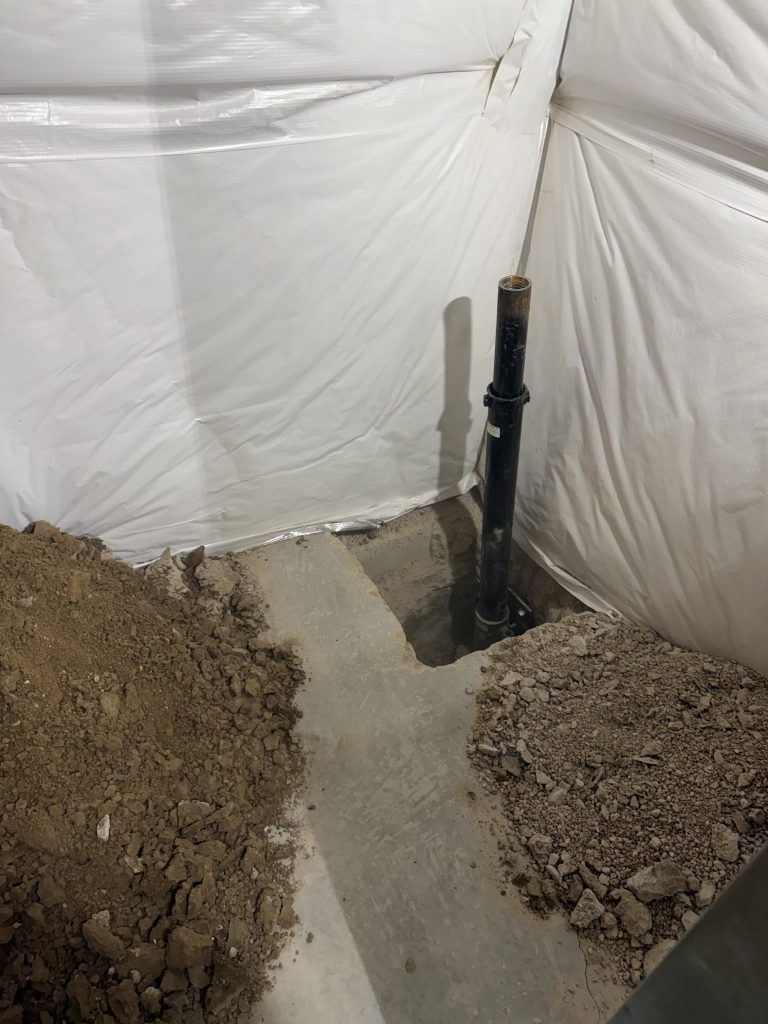
Level Engineering and Inspection designed a repair plan specifying 19 Ram Jack helical piers in two configurations. Because exterior access to the foundation was limited, crews installed all piers from the interior of the unfinished basement. This approach leveraged a key advantage of the helical pier system. Specifically, it requires minimal excavation and can be installed using compact, man-portable equipment in confined spaces.
18 Foundation Underpinning Piers
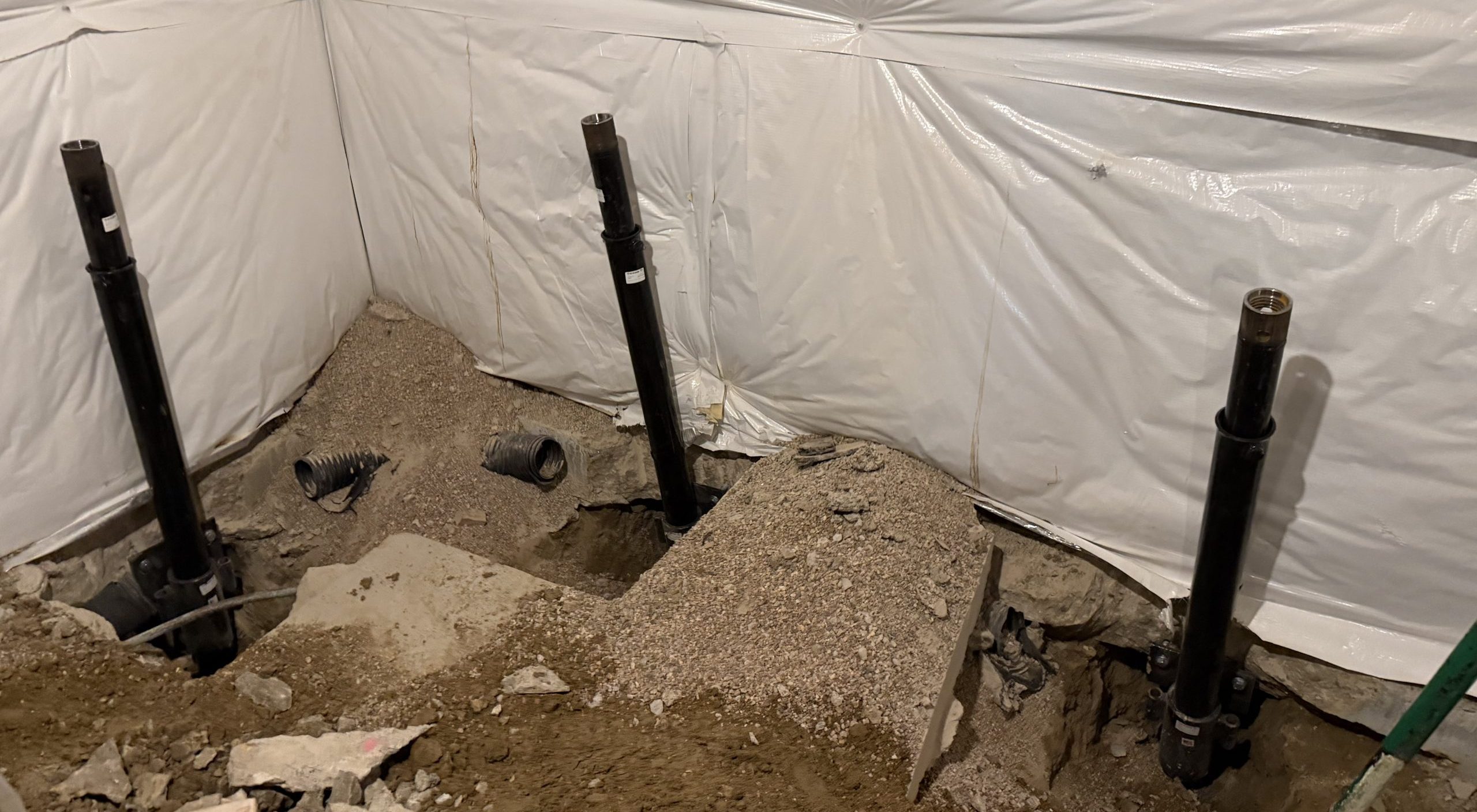
The primary repair consisted of 18 helical piers installed along the perimeter of the foundation to stabilize and support the structure.
Each pier was configured as follows:
- 2.875″ Ram Jack steel helical pier shaft
- 8″ single-helix disc for torque and load transfer into stable soil
- 4′ guide sleeve to ensure proper alignment and load transfer at the bracket connection
1 Interior Basement Support Pier
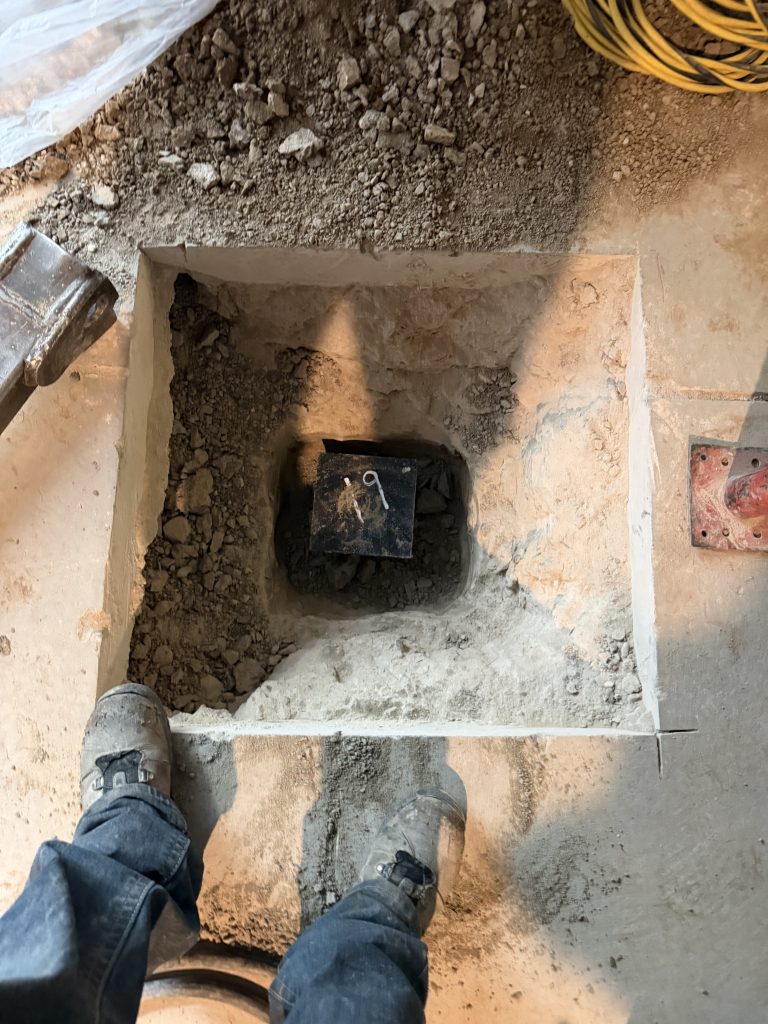
One additional helical pier was installed within the basement interior using a new construction bracket. The main beam supporting the floor joists had been bearing on a single interior post set directly on the slab, which can allow movement over time. A Ram Jack helical pier was driven approximately 22 feet deep into stable soil, integrated with a concrete cap and bracket to properly support the load. Once cured, an adjustable steel column was installed at mid-span, transferring the structural load from the slab to the pier system. This upgrade provides consistent vertical load transfer and delivers long-term stability for the structure above.
Why Ram Jack Helical Piers?
Ram Jack helical piers provide a proven, engineered deep foundation solution. They bypass unstable near-surface soils and transfer structural loads to deeper, competent bearing strata. As a result, they deliver reliable long-term support.
Key advantages for this project included:
- Minimal excavation and site disruption. Crews used compact equipment, installing all piers on the interior of the home to preserve exterior landscaping and limit impact on the homeowner.
- No concrete curing time. The all-steel system allowed immediate loading after installation.
- Precision torque monitoring. Installers continuously monitored torque during installation to confirm capacity. This process gave both the engineer and homeowner confidence in the result.